
AI-powered monitoring systems now reduce forklift accidents by up to 35%, transforming warehouse safety in 2026. New OSHA requirements demand behavioral tracking and advanced training methods that go far beyond traditional approaches. This guide walks you through critical 2026 compliance updates, breakthrough technologies, and practical implementation steps that protect your operators while meeting regulatory standards.
Table of Contents
- Introduction To Forklift Safety In 2026
- Understanding OSHA Compliance Updates For 2026
- Technological Advancements Impacting Forklift Safety
- Innovations In Forklift Training And Certification
- Common Misconceptions About Forklift Safety And Their Corrections
- Comparing Traditional And Technology-Integrated Forklift Safety Programs
- Practical Steps For Implementing 2026 Forklift Safety Trends
- Explore Forklift Safety Training Solutions
- Frequently Asked Questions
Key takeaways
| Point | Details |
|---|---|
| OSHA 2026 compliance | New regulations require behavioral monitoring technology and revised operator training protocols. |
| Technology integration | AI, telematics, and predictive maintenance cut accident rates while improving operational efficiency. |
| Training innovations | Augmented reality simulations and continuous feedback systems enhance operator skills and retention. |
| Common myths | Fatigue causes more accidents than inexperience, and technology supplements rather than replaces human oversight. |
| Implementation roadmap | Success requires compliance audits, smart technology selection, and continuous performance monitoring. |
Introduction to forklift safety in 2026
Warehouse forklift accidents remain a leading cause of workplace injuries, with thousands of incidents occurring annually across North America. Tip-overs, struck-by accidents, and falls from elevated platforms dominate incident reports. These accidents result in severe injuries, costly downtime, and substantial OSHA penalties that can cripple operations.
Evolving safety standards directly address these persistent hazards. Updated regulations target the root causes of accidents through proactive monitoring and enhanced training requirements. Warehouses that ignore these changes face escalating compliance risks and higher insurance premiums.
OSHA’s 2026 forklift safety regulations introduce mandatory behavioral monitoring and technology-assisted training verification. These updates shift the compliance framework from reactive documentation to active accident prevention. The changes affect every aspect of forklift operations, from initial certification through daily operational oversight.
Key challenges warehouse managers face in 2026 include:
- Integrating behavioral monitoring systems without disrupting workflows
- Updating training programs to meet augmented reality and continuous feedback requirements
- Balancing technology costs against accident reduction benefits
- Addressing operator privacy concerns while maintaining safety oversight
The good news? Breakthrough technologies and proven training methods now make comprehensive safety programs more accessible and effective than ever. Understanding these tools helps you build a safety culture that protects operators while satisfying regulatory requirements.
Understanding OSHA compliance updates for 2026
OSHA’s 2026 forklift safety requirements mandate behavioral monitoring technology in all warehouse operations. These systems track operator actions in real time, flagging unsafe behaviors like excessive speed, hard braking, and improper turning. Facilities must demonstrate active monitoring and intervention protocols during compliance audits.
Operator training requirements have undergone significant revision. Forklift certification requirements 2026 now include technology-enhanced modules and more frequent recertification cycles. Training must incorporate simulator time and documented behavioral assessments, not just theoretical knowledge tests.
Common compliance pitfalls that trap unprepared warehouses:
- Incomplete documentation of technology-assisted training sessions
- Failure to establish monitoring intervention protocols before accidents occur
- Inadequate operator privacy policies that violate labor regulations
- Missing equipment inspection logs that connect to predictive maintenance systems
Non-compliance carries steep penalties in 2026. OSHA fines for serious violations start at $15,625 per incident, with willful violations reaching $156,259. Repeat violations trigger enhanced scrutiny and potential facility shutdowns. Beyond financial penalties, non-compliance increases insurance costs and exposes companies to civil litigation after accidents.
The compliance landscape rewards proactive managers. Essential OSHA training tips 2026 emphasize building safety systems that exceed minimum requirements. This approach creates buffer room during audits and demonstrates genuine commitment to operator wellbeing.
Successful compliance programs treat regulations as minimum standards, not aspirational goals. They integrate technology seamlessly, maintain meticulous records, and foster cultures where safety discussions happen daily. This mindset shift transforms compliance from a burden into a competitive advantage.
Technological advancements impacting forklift safety
AI-powered monitoring represents the biggest safety breakthrough in warehouse operations. These systems use cameras and sensors to detect risky actions and reduce accidents by up to 35%. Machine learning algorithms identify patterns invisible to human supervisors, like gradual speed increases or subtle balance shifts before tip-overs.
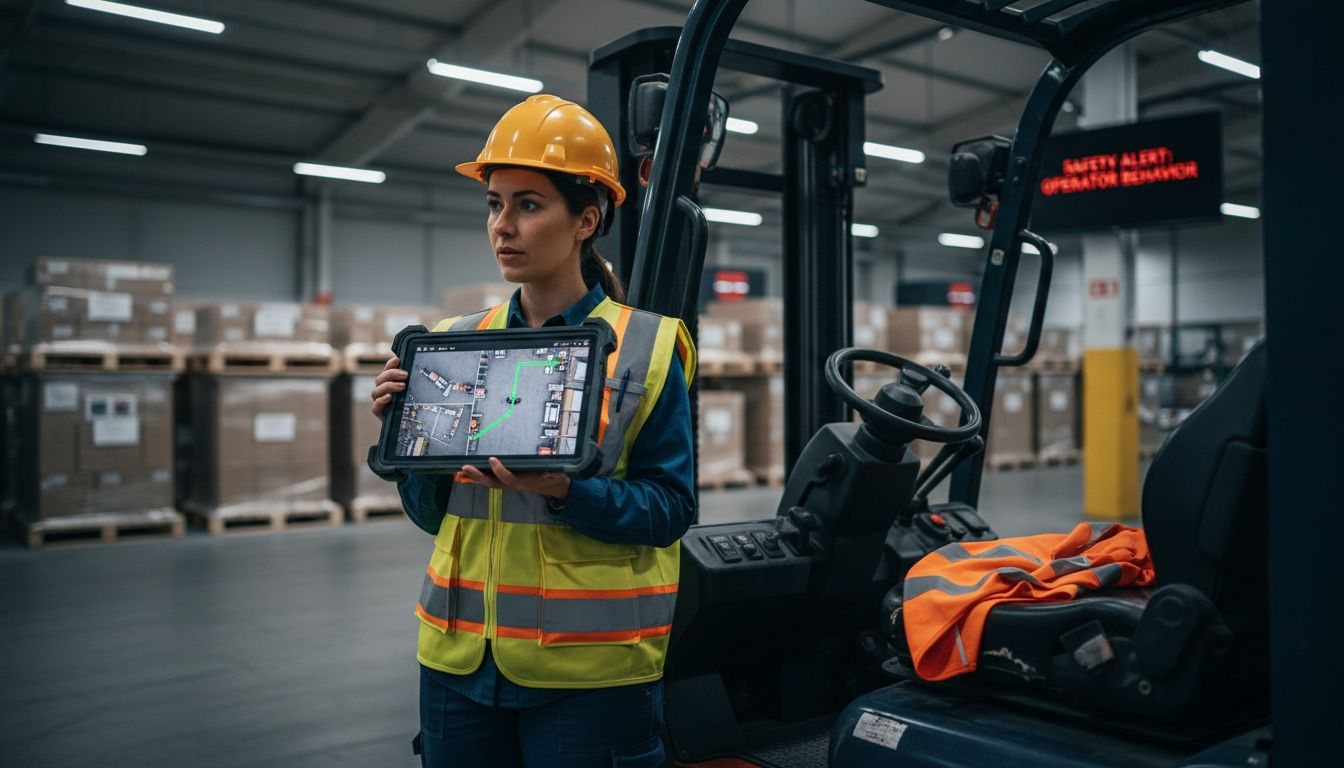
Real-time alerts notify supervisors instantly when operators engage in dangerous behaviors. The system sends notifications to tablets or smartphones, enabling immediate intervention. Over time, AI learns facility-specific risk factors, customizing alerts to your unique operational environment.
Telematics delivers comprehensive vehicle diagnostics and operational insights. GPS tracking shows exact forklift locations and movement patterns throughout shifts. Load sensors detect overweight conditions before stability becomes compromised. Impact sensors record collision severity and frequency, identifying high-risk areas and operators needing additional coaching.
Predictive maintenance capabilities transform equipment reliability:
- Battery health monitoring prevents unexpected power failures during operations
- Hydraulic system diagnostics catch leaks before catastrophic failures
- Brake wear tracking schedules maintenance before stopping power diminishes
- Tire condition alerts prevent blowouts and stability issues
These technologies reduce breakdown-related hazards while cutting maintenance costs by 20-30%. Scheduled maintenance based on actual component wear beats arbitrary calendar schedules every time.
Integration challenges include upfront costs, IT infrastructure requirements, and employee adaptation periods. Forklift safety technology trends show that facilities typically achieve positive ROI within 18-24 months through reduced accidents and lower insurance premiums.
Pro Tip: Start with one technology system and expand gradually. Pilot AI monitoring on your highest-risk shift before rolling out facility-wide. This approach lets you refine processes and demonstrate value before major capital commitments.
Innovations in forklift training and certification
Augmented reality training creates immersive learning environments without physical risk. Operators wear AR headsets that overlay digital hazards onto real warehouse spaces. They practice navigating tight aisles, stacking at height, and responding to emergencies in scenarios that feel authentic but eliminate actual danger.
AR training modules improve skill retention significantly compared to classroom instruction. Muscle memory develops through realistic simulations, and operators gain confidence before touching actual equipment. Training time compresses while competency levels rise.
Continuous feedback systems monitor operator performance after initial certification. Telematics data feeds into coaching dashboards that highlight improvement areas. Supervisors receive weekly reports showing each operator’s safety scores, efficiency metrics, and trend lines. This ongoing assessment catches skill degradation early.
Blended training approaches combine traditional and innovative methods:
- Classroom instruction covers OSHA regulations and basic physics
- AR simulations build spatial awareness and hazard recognition skills
- Hands-on practice with real equipment develops operational confidence
- Continuous monitoring provides data-driven coaching opportunities
Updated future of forklift training technology aligns perfectly with OSHA’s 2026 certification requirements. Digital training records automatically document completion times, assessment scores, and recertification dates. This eliminates paperwork headaches during compliance audits.
The certification process now emphasizes demonstrated competency over checkbox completion. Operators must show proficiency in monitored scenarios, not just pass written tests. This shift ensures certified operators possess genuine skills that translate to safer daily operations.
Common misconceptions about forklift safety and their corrections
Many managers blame inexperienced operators for most accidents. Reality shows fatigue and distraction contribute to over 40% of forklift accidents, regardless of experience level. Veteran operators become complacent, cutting corners that newer workers wouldn’t risk. Shift length and break schedules matter more than years behind the controls.
Another myth suggests technology replaces human oversight entirely. AI monitoring and telematics provide data, but supervisors must interpret findings and coach operators. Technology flags problems; people solve them. The most effective safety programs combine automated detection with human intervention and relationship building.
Privacy concerns around behavioral monitoring deserve attention but shouldn’t block implementation. Properly designed systems:
- Monitor behaviors, not personal activities or conversations
- Use data exclusively for safety improvement and coaching
- Establish clear policies about data access and retention
- Include operators in program design to address concerns transparently
Some facilities believe small warehouses don’t need advanced safety systems. Accident severity doesn’t decrease with facility size. A single forklift incident can bankrupt a small operation through medical costs, legal fees, and lost productivity. Scaled technology solutions fit every budget and operational scope.
The misconception that safety investments only benefit employees ignores business realities. Accident reduction directly improves profitability through lower insurance premiums, reduced downtime, and enhanced productivity. Safe operations attract better talent and improve customer confidence in your operational reliability.
Pro Tip: Host monthly safety meetings where operators share close-call experiences anonymously. These discussions reveal misconceptions in real time and build collective problem-solving skills that technology alone cannot provide.
Comparing traditional and technology-integrated forklift safety programs
| Aspect | Traditional Programs | Technology-Integrated Programs |
|---|---|---|
| Accident reduction | 10-15% improvement | 30-40% improvement |
| Training methods | Classroom and hands-on only | AR simulations, continuous feedback, hands-on |
| Compliance tracking | Manual logs, paper records | Automated digital documentation |
| Upfront costs | $2,000-5,000 per operator | $8,000-15,000 per operator |
| Ongoing costs | Minimal beyond recertification | Software subscriptions, equipment maintenance |
| Implementation time | 2-4 weeks | 8-12 weeks |
| Operator acceptance | High, familiar methods | Moderate, requires change management |
| Data insights | Limited to incident reports | Comprehensive behavioral and operational analytics |
| Scalability | Easily scales with headcount | Requires infrastructure investment |
| ROI timeline | Immediate but modest | 18-24 months for full value |
Traditional programs work for small operations with low turnover and simple layouts. They provide baseline compliance without technology complexity. However, they lack the proactive prevention capabilities that reduce serious accidents.
Technology-integrated programs suit medium to large warehouses with complex operations. The data insights justify higher costs through measurable accident reduction and efficiency gains. Facilities with frequent turnover particularly benefit from accelerated AR training that builds competency faster.

Budget considerations should include insurance premium reductions. Many carriers offer 15-25% discounts for facilities with certified AI monitoring and predictive maintenance systems. These savings partially offset technology investments within the first year.
Staff acceptance improves when operators see personal benefits. Technology that reduces physical strain, prevents accidents affecting colleagues, and provides objective performance feedback typically gains support after initial skepticism fades.
Practical steps for implementing 2026 forklift safety trends
- Conduct a comprehensive gap analysis comparing your current program against forklift training requirements 2026. Document missing behavioral monitoring capabilities, outdated training methods, and incomplete record-keeping systems. Prioritize gaps that create immediate compliance risks or accident exposure.
- Evaluate technology vendors based on your specific operational needs. Request pilot programs that test AI monitoring in your actual warehouse environment. Compare telematics platforms for ease of integration with existing fleet management systems. Assess AR training modules for content relevance to your equipment types and operational workflows.
- Implement AR training and continuous feedback programs methodically. Start with new operator onboarding before rolling out to existing staff. Establish baseline performance metrics before launching monitoring systems. Create clear communication about how data will be used for coaching, not punishment.
- Build ongoing data-driven monitoring and feedback loops. Schedule weekly review sessions where supervisors analyze behavioral trends and identify coaching opportunities. Set quarterly safety goals based on monitoring data. Celebrate improvements publicly to reinforce positive behaviors and demonstrate program value.
- Establish a continuous improvement committee that includes operators, supervisors, and safety managers. Review technology effectiveness monthly and adjust monitoring parameters based on operational realities. Solicit operator feedback about system accuracy and coaching helpfulness. Refine training content based on common behavioral patterns the AI identifies.
- Document everything for compliance audits. Maintain digital records of training completions, monitoring interventions, maintenance schedules, and accident investigations. Follow OSHA forklift compliance guide safe operations recommendations for record retention and accessibility.
Pro Tip: Engage operators early in the selection process by including them in vendor demonstrations. Their input on system usability improves adoption rates and helps identify practical concerns vendors might overlook. Operators who help choose the technology become champions during rollout.
Implementation success requires patience and consistent communication. Technology alone doesn’t create safety culture. Leadership commitment, transparent policies, and genuine concern for operator wellbeing transform tools into results. Plan for a 6-12 month adjustment period before expecting full program benefits.
Explore forklift safety training solutions
Meeting 2026 OSHA requirements while implementing cutting-edge safety technologies demands expert guidance and proven training programs. Forklift Academy offers comprehensive solutions designed specifically for warehouse managers navigating these complex challenges.
Our forklift train the trainer online program equips your team to deliver compliant, technology-enhanced training internally. You’ll master AR simulation integration, behavioral monitoring interpretation, and continuous feedback coaching methods. This approach reduces per-operator training costs while maintaining OSHA compliance standards.
Explore our complete training programs covering every certification level and operational scenario. From initial operator qualification through supervisor safety management, our curriculum aligns with the latest regulatory requirements. We incorporate real-world case studies and technology implementation best practices throughout every module.
Need compliance guidance? Our OSHA forklift compliance guide safe operations resource provides step-by-step roadmaps for audit preparation and ongoing regulatory adherence. You’ll access templates, checklists, and documentation systems that simplify compliance tracking.
Frequently asked questions
How do AI-powered monitoring systems reduce forklift accidents?
AI systems analyze operator behavior continuously, detecting risky actions like excessive speed, sharp turns, and unstable loads in real time. They alert supervisors immediately, enabling quick intervention before accidents occur. Over time, the data reveals patterns that inform targeted training and process improvements, creating sustained safety gains.
What are the key OSHA forklift training changes in 2026?
OSHA now requires more frequent, technology-enhanced operator training with documented behavioral assessments. Programs must include AR simulation components and continuous performance monitoring. Certification renewal cycles have shortened, and facilities must demonstrate active intervention based on monitoring data. These changes emphasize proven competency over checkbox compliance.
How can warehouses overcome employee resistance to new safety technology?
Involve operators in technology selection and pilot testing from the beginning. Communicate clearly how monitoring data will be used exclusively for coaching and safety improvement, never for punitive actions. Provide thorough hands-on training that builds confidence with new systems. Create feedback channels where operators can voice concerns and suggest improvements, demonstrating that their input shapes program implementation.
What measurable benefits can technology-integrated forklift safety programs provide?
Facilities typically achieve 30-40% reduction in forklift accidents and injuries within the first year. Compliance audit success rates improve dramatically with automated documentation systems. Equipment downtime decreases by 20-30% through predictive maintenance capabilities. Insurance premiums often drop 15-25% when carriers verify comprehensive monitoring systems. These tangible results justify technology investments while protecting your most valuable asset: your people.
Recommended
- 7 Essential Forklift Safety Rules for 2025 Compliance – Top Osha Forklift Certification
- Forklift Recertification 2026: Cut Accidents 30% & Stay OSHA Legal – Top Osha Forklift Certification
- Forklift Safety Technology Trends Impacting OSHA Compliance – Top Osha Forklift Certification
- 8 Essential Workplace Safety Best Practices for 2023 – Top Osha Forklift Certification