
Nearly one in four American workplaces reports incidents linked to forklift operation, yet many companies struggle to navigate the range of training options available. Choosing the right delivery method is vital for reducing risk and ensuring compliance, whether your team is new to forklifts or seeking recertification. This guide breaks down key training strategies and highlights what makes each path effective so you can make informed decisions that protect both your people and your business.
Table of Contents
- Defining Forklift Training Delivery Methods
- Comparing Online, Onsite, Blended Options
- How Blended Training Meets OSHA Requirements
- Practical Evaluation And Documentation Needs
- Choosing Methods For Businesses And Individuals
Key Takeaways
| Point | Details |
|---|---|
| Diverse Training Methods | Forklift training includes classroom instruction, practical hands-on training, and online learning, allowing flexibility for different learning styles. |
| Blended Learning Approach | Combining online modules with in-person training maximizes skill acquisition and ensures comprehensive operator competence. |
| OSHA Compliance | Blended training effectively meets OSHA requirements by integrating theoretical knowledge with practical skill evaluations to validate operator competencies. |
| Evaluation and Documentation | Maintaining thorough documentation of training and performance assessments is essential for regulatory compliance and operator accountability. |
Defining forklift training delivery methods
Forklift training delivery methods encompass diverse educational strategies designed to equip operators with critical safety skills and operational knowledge. These methods range from traditional classroom instruction to advanced interactive training approaches that leverage technology and hands-on experience. Understanding the nuanced landscape of training delivery helps businesses and individuals select the most effective learning pathway.
Traditional training approaches typically involve three primary delivery methods: classroom-based instruction, practical hands-on training, and virtual or online learning platforms. Classroom instruction provides foundational theoretical knowledge, covering critical topics like safety protocols, equipment mechanics, and operational regulations. Practical training allows operators to develop muscle memory and real-world skills through supervised equipment manipulation. Online learning offers flexibility, enabling students to complete theoretical components at their own pace while accessing comprehensive multimedia resources.
Modern forklift training increasingly embraces blended learning techniques that combine multiple delivery methods. This approach recognizes that different learners absorb information differently and requires varied instructional strategies. For instance, a comprehensive program might include initial online modules to introduce core concepts, followed by intensive in-person practical sessions where certified instructors provide direct supervision and immediate feedback. Instructor-led training remains crucial, ensuring that theoretical knowledge translates into safe, competent operational skills.
Pro Tip: Select a training program that offers multiple delivery methods and provides personalized learning experiences tailored to your specific skill level and learning preferences. Prioritize programs that combine theoretical knowledge with substantial hands-on practice to maximize your operational competence and safety understanding.
Comparing online, onsite, blended options
Forklift training delivery options have evolved significantly, offering professionals multiple pathways to acquire critical operational skills. These approaches each present unique advantages and challenges that impact learning effectiveness, time commitment, and practical skill development. Modern training strategies now recognize the importance of flexibility and personalized learning experiences.
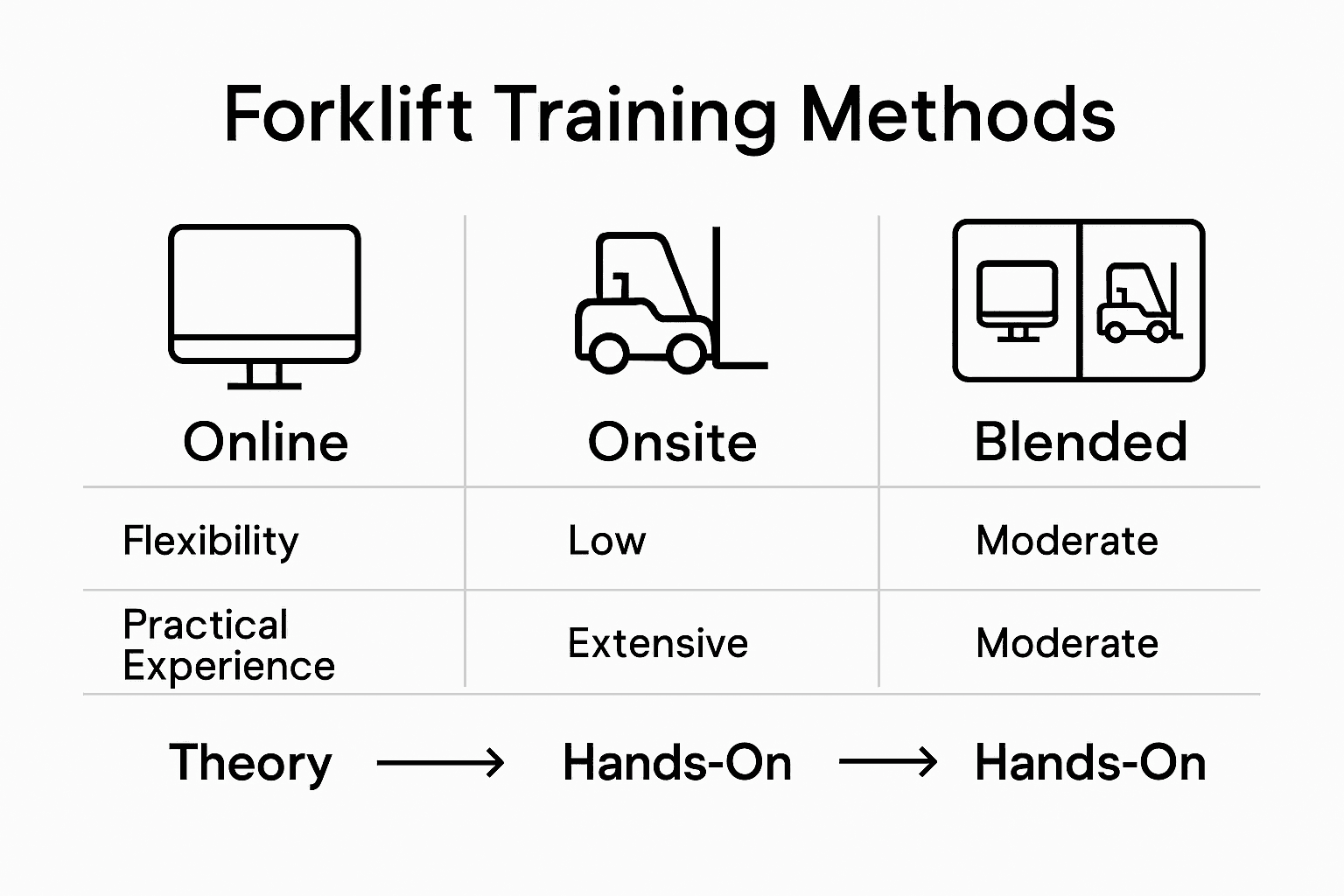
Online training represents the most convenient option, allowing students to complete theoretical components remotely. Digital platforms typically offer comprehensive modules covering safety regulations, equipment mechanics, and operational protocols. These courses enable learners to progress at their own pace, accessing multimedia content and interactive assessments from anywhere with internet connectivity. However, online training lacks the hands-on experience crucial for developing muscle memory and real-world operational skills.
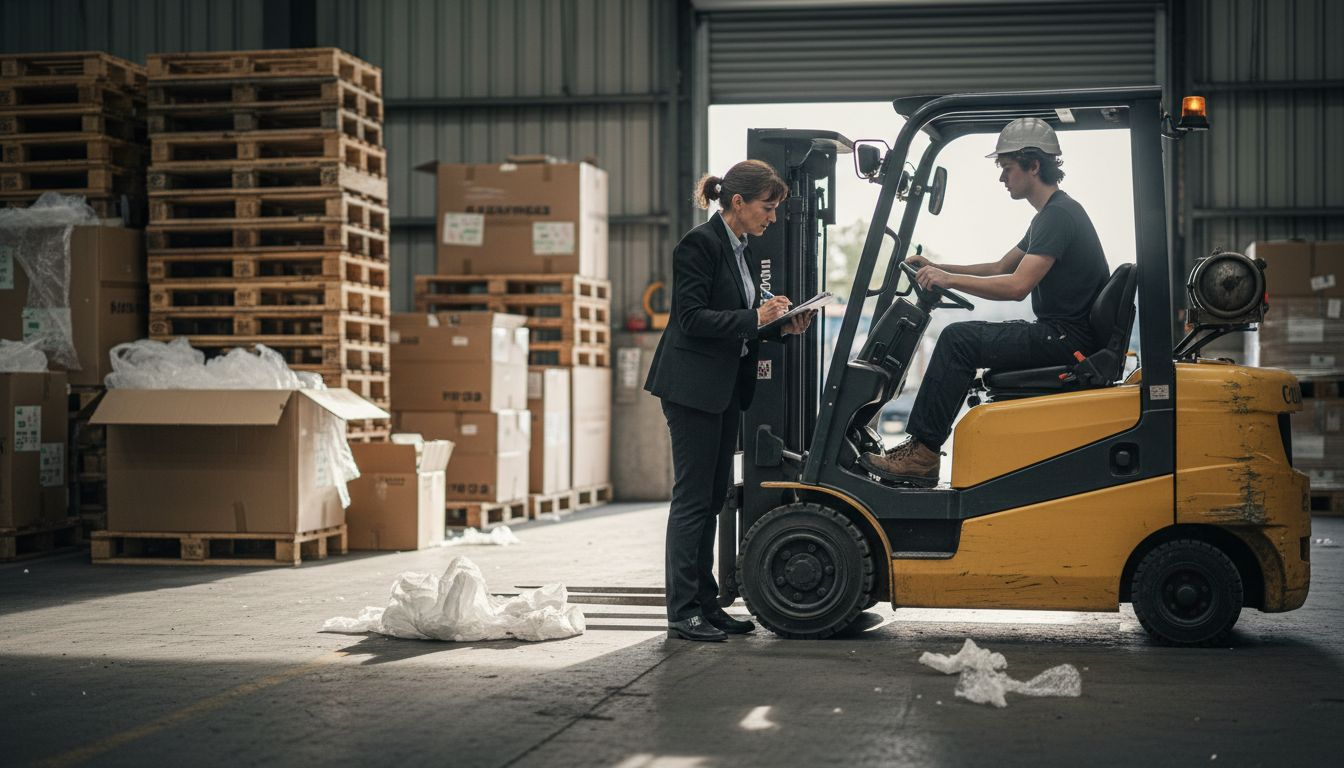
Onsite training provides the most immersive learning experience, featuring direct instructor supervision and immediate equipment interaction. Participants engage in practical demonstrations, supervised equipment operation, and receive real-time feedback from certified professionals. Hands-on training ensures operators develop precise technical skills and understand nuanced safety protocols through direct experience. While more time-intensive, onsite programs guarantee comprehensive skill validation and practical competence.
Blended learning combines the best elements of online and onsite training, creating a holistic educational approach. Students complete foundational theoretical content online before attending intensive practical sessions. This method maximizes learning efficiency by allowing individuals to internalize core concepts digitally while reserving in-person time for skill demonstration and performance evaluation.
Pro Tip: Assess your learning style, schedule, and specific workplace requirements when selecting a forklift training method. Choose a program that balances theoretical knowledge with substantial practical experience to ensure comprehensive skill development and workplace safety competence.
To assist in selecting the ideal forklift training delivery, the table below compares key aspects of each method:
| Training Method | Flexibility for Learners | Depth of Practical Experience | Best Fit For |
|---|---|---|---|
| Online | High—self-paced access | Minimal—no real equipment use | Remote learners, tight schedules |
| Onsite (In-Person) | Limited—fixed sessions | Extensive—direct equipment use | Skill-focused, new operators |
| Blended Learning | Moderate—some flexibility | Strong—combined with practical | Diverse teams, efficiency seekers |
How blended training meets OSHA requirements
Blended forklift training represents a strategic approach to meeting stringent OSHA regulatory requirements for operator certification and workplace safety. Unlike traditional single-method training programs, this comprehensive approach integrates digital learning with hands-on practical instruction, ensuring operators receive thorough and verifiable skill development across theoretical and practical domains.
Theoretical Components of blended training typically involve online modules that systematically cover critical safety regulations, equipment mechanics, and operational protocols. These digital platforms allow learners to progress at their own pace, accessing multimedia content and interactive assessments that align with OSHA’s detailed knowledge requirements. Students can repeatedly review complex concepts, ensuring deep comprehension of safety standards and operational guidelines before transitioning to practical training sessions.
The Practical Training Phase complements digital learning by providing direct, supervised equipment interaction. Certified instructors evaluate operators’ physical skills, ensuring they can translate theoretical knowledge into safe, precise forklift operations. Competency-based training systems recognize this approach as essential for meeting regulatory standards, requiring demonstrable skill proficiency beyond mere theoretical understanding. This phase involves hands-on equipment manipulation, real-world scenario training, and comprehensive performance assessments that directly address OSHA’s three-year recertification requirements.
Comprehensive Evaluation remains a critical aspect of blended training. OSHA mandates that employers develop robust training programs that not only educate but also systematically validate operator competence. Blended training models incorporate multiple assessment stages, including digital knowledge tests, practical skill demonstrations, and periodic performance reviews, creating a holistic approach to operator certification and workplace safety.
Pro Tip: Document every stage of your blended training meticulously. Maintain detailed records of both online learning progress and practical skill assessments to ensure seamless compliance with OSHA’s comprehensive certification requirements.
Practical evaluation and documentation needs
Practical evaluation and documentation represent critical components of comprehensive forklift operator training, ensuring workplace safety and regulatory compliance. Competency assessment requires rigorous evidence of actual performance, extending far beyond simple written examinations to demonstrate genuine operational skills and safety awareness.
Evaluation Criteria for forklift operators typically encompass multiple dimensions of professional competence. These include technical proficiency, equipment handling precision, safety protocol adherence, and situational decision-making capabilities. Certified instructors conduct systematic performance assessments that evaluate an operator’s ability to navigate complex workplace scenarios, manage equipment safely, and respond appropriately to potential hazards. Each evaluation must comprehensively document the operator’s skills through standardized checklists, practical demonstrations, and detailed performance narratives.
Documentation Requirements are equally critical in maintaining regulatory compliance. OSHA mandates consistent operator certification and performance documentation, requiring employers to maintain detailed training records that include initial certification dates, periodic reassessments, and comprehensive skill evaluations. These documents must capture not just theoretical knowledge but also practical competence, including specific details about equipment types operated, performance benchmarks achieved, and any areas requiring additional training or improvement.
Successful documentation involves creating a robust record-keeping system that tracks each operator’s entire professional development trajectory. This system should include digital and physical records of training modules completed, practical assessment results, instructor observations, and periodic performance reviews. Comprehensive documentation not only ensures regulatory compliance but also provides valuable insights into individual operator development and potential training needs.
Pro Tip: Develop a standardized digital tracking system for forklift operator documentation that automatically flags upcoming certification renewals, tracks individual performance metrics, and maintains a comprehensive historical record of training achievements.
Below is a summary of OSHA-related training documentation essentials:
| Documentation Type | Purpose | Examples Included |
|---|---|---|
| Training Records | Prove initial and ongoing instruction | Dates, training topics, instructor |
| Practical Skill Assessments | Validate hands-on competence | Checklists, evaluations, narratives |
| Recertification Tracking | Ensure compliance with requirements | Expiry dates, renewal reminders |
Choosing methods for businesses and individuals
Selecting the most appropriate forklift training method requires careful consideration of organizational needs, individual learning styles, and practical constraints. Blended learning approaches offer unprecedented flexibility, allowing businesses and individuals to customize training experiences that maximize skill acquisition and operational efficiency.
Business Considerations play a critical role in training method selection. Large organizations with multiple shift schedules might prioritize online modules that enable employees to complete theoretical components during downtime. Smaller businesses with limited resources may prefer concentrated, intensive training programs that minimize operational disruptions. The key is identifying a training approach that balances comprehensive skill development with minimal productivity loss. Some organizations benefit from innovative training technologies like Virtual Reality simulations, which provide immersive, risk-free environments for practicing complex operational scenarios.
Individual Learning Preferences significantly influence training effectiveness. Some operators learn best through interactive digital platforms, while others require hands-on, instructor-led experiences. Blended training models accommodate these diverse learning styles by combining multiple instructional approaches. Younger, technology-comfortable workers might appreciate multimedia-rich online modules, whereas experienced operators might prefer traditional practical demonstrations. The most successful training programs recognize and adapt to these individual differences, ensuring that each participant can effectively acquire and retain critical forklift operation skills.
Financial and time constraints also factor into training method selection. Online and blended training options often provide more cost-effective solutions compared to traditional full-time, in-person programs. These flexible approaches allow individuals to continue working while completing certification requirements, and businesses can spread training costs across longer periods. Moreover, digital tracking and modular learning enable more granular skill assessment, helping organizations identify and address specific training needs more efficiently.
Pro Tip: Conduct a comprehensive training needs assessment before selecting a forklift training method. Evaluate your team’s current skill levels, learning preferences, scheduling constraints, and budget to design a tailored training approach that maximizes skill development and operational safety.
Find the Best Forklift Training Delivery Method for Your Needs
Navigating the complex world of forklift training delivery methods can feel overwhelming. Whether you need comprehensive hands-on practice or flexible online theory courses, the key is balancing practical skill development, regulatory compliance, and your unique learning preferences. This article highlights critical challenges such as meeting OSHA requirements, ensuring thorough practical evaluation, and selecting the right combination of online and onsite training to boost confidence and workplace safety.
At Forkliftacademy.com, we understand these challenges and offer tailored solutions designed to fit individual learners and businesses alike. With over 20 years of experience, we provide OSHA-compliant forklift certification programs that include online courses for theoretical knowledge and onsite sessions for essential practical skills. Our extensive network of training locations ensures hands-on learning is accessible, while our Forklift Certification Archives – Top Osha Forklift Certification page offers resources to deepen your understanding of compliance and safety standards.
Ready to take the next step toward safe, confident forklift operation?
Explore our flexible programs at Forkliftacademy.com and discover how our blended training options can meet your specific needs today.
Act now to secure your certification with proven training methods that work. Visit our Forklift Safety Archives – Top Osha Forklift Certification for valuable safety insights and get started on your path to OSHA compliance and professional growth.
Frequently Asked Questions
What are the primary forklift training delivery methods?
The primary forklift training delivery methods include classroom-based instruction, practical hands-on training, and online learning platforms. Each method has its own strengths and is designed to cover safety protocols, equipment mechanics, and operational regulations.
How does blended learning benefit forklift training?
Blended learning combines online theoretical training with in-person practical sessions, accommodating various learning styles. This approach allows learners to grasp core concepts digitally while getting hands-on experience under the supervision of certified instructors.
What are the advantages of onsite forklift training?
Onsite training provides an immersive experience with direct instructor supervision and immediate equipment interaction. Participants receive real-time feedback and develop precise technical skills necessary for safe forklift operation.
How can I ensure compliance with OSHA regulations in my forklift training?
To ensure compliance with OSHA regulations, choose a blended training program that combines theoretical knowledge with practical hands-on training. Maintain meticulous documentation of training records, skill assessments, and recertification tracking to validate operator competence.