
Many forklift operators assume their initial certification lasts forever. That’s a costly mistake. OSHA requires recertification every three years, and sometimes sooner, to maintain workplace safety and legal compliance. Missing these deadlines puts your company at risk of fines exceeding $13,000 and increases accident liability. This guide walks you through the recertification timeline, training requirements, employer duties, and the tangible safety benefits of staying current.
Table of Contents
- Understanding OSHA Forklift Recertification Requirements And Timeline
- Triggers For Early OSHA Recertification
- Recertification Training Content And Methods
- Employer Roles And Responsibilities In OSHA Recertification
- Consequences Of Missing OSHA Recertification Deadlines
- Common Misconceptions About OSHA Forklift Recertification
- Recertification Benefits And Safety Outcomes
- Streamline Your OSHA Forklift Recertification With Our Expert Training
- Frequently Asked Questions
Key Takeaways
| Point | Details |
|---|---|
| Recertification Timeline | OSHA mandates forklift operators recertify every 3 years minimum, sooner if unsafe operation occurs. |
| Training Components | Recertification requires classroom instruction plus hands-on practical evaluation; online-only courses do not meet OSHA standards. |
| Employer Responsibility | Companies must provide, fund, and document all recertification training, maintaining records for at least 3 years. |
| Non-Compliance Risks | Missing deadlines results in OSHA fines up to $13,653 per violation and elevated workplace accident exposure. |
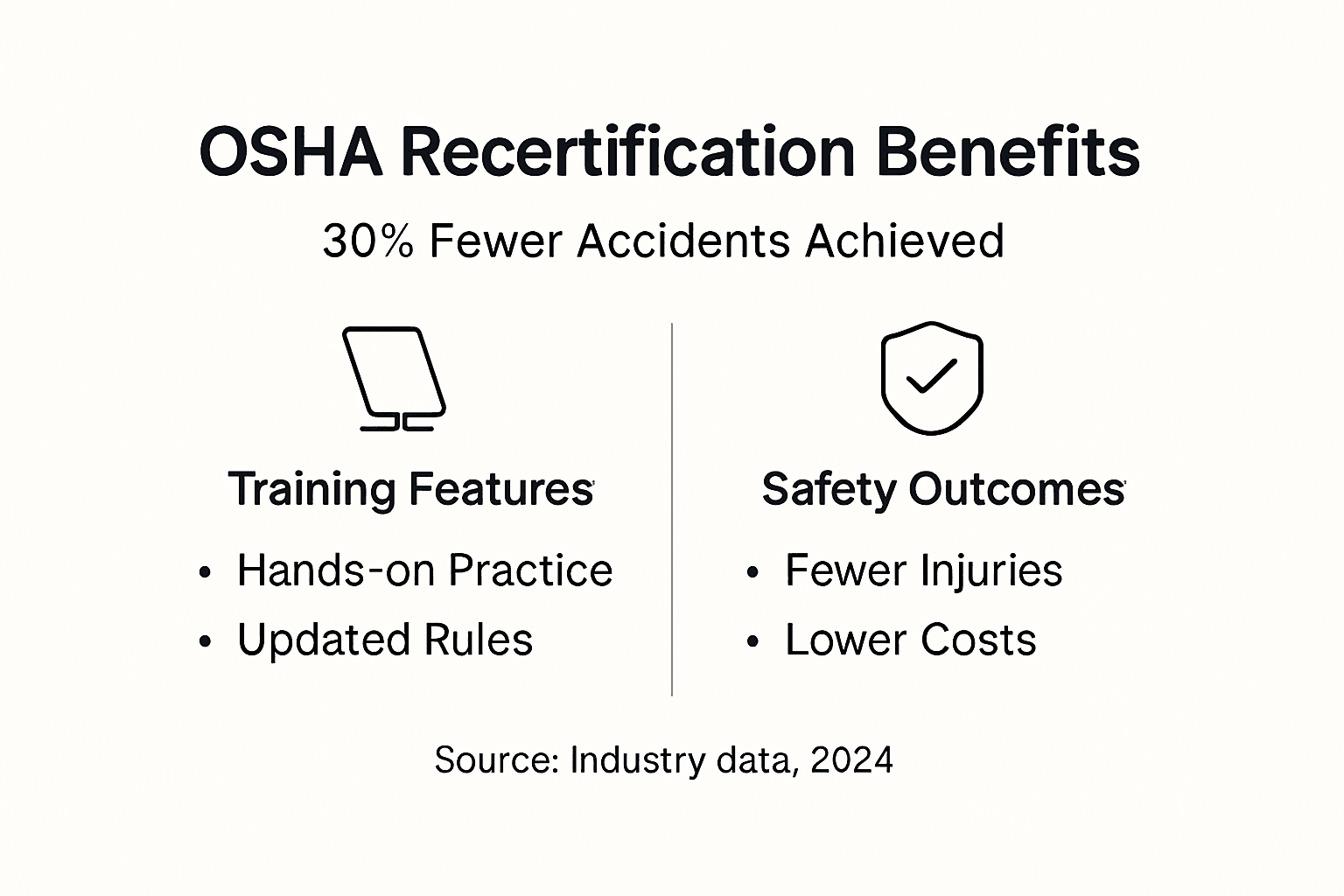
| Safety Impact | Timely recertification programs reduce forklift accidents by up to 30%, protecting workers and business operations. |
Understanding OSHA Forklift Recertification Requirements and Timeline
The Powered Industrial Trucks Standard (29 CFR 1910.178) establishes clear expectations for operator competency. Employers are legally required to provide forklift recertification training and maintain training records for at least three years. The standard three-year cycle exists because skills degrade, equipment evolves, and safety protocols update.
Understanding forklift operator requirements starts with recognizing that recertification isn’t optional. It’s a federal mandate designed to prevent the nearly 100 fatalities and 95,000 injuries forklifts cause annually. Your compliance clock starts ticking the day you complete initial certification.
Critical recertification timeline factors include:
- Initial certification date triggers the three-year countdown
- Early recertification may be required based on workplace incidents
- Employers must track expiration dates for every operator
- Documentation lapses create compliance vulnerabilities during OSHA audits
Think of recertification as renewing your driver’s license. The skills you demonstrate today may not reflect your abilities three years from now without regular reinforcement and evaluation.
Triggers for Early OSHA Recertification
The three-year cycle represents the maximum interval, not the only trigger. Recertification can be triggered sooner by accidents, observed unsafe operation, or assignment to different equipment types. These triggers protect workers by addressing competency gaps before they escalate into serious incidents.
Workplace events requiring immediate recertification:
- Any accident or near-miss involving the operator
- Supervisor observation of unsafe operating practices
- Transfer to a different forklift class or attachment type
- Extended absence from forklift operation exceeding one year
- Changes to workplace conditions affecting safe operation
Pro Tip: Implement monthly safety observations where supervisors document operator performance. This creates an early warning system for skill deterioration and provides documentation supporting recertification decisions.
Many compliance managers miss the equipment-specific requirement. Operating a sit-down counterbalance forklift doesn’t qualify you for a reach truck or order picker. Each equipment class demands separate evaluation. Staying current with OSHA forklift certification updates helps you identify these distinctions before violations occur.
The financial impact of ignoring early triggers compounds quickly. One accident involving an operator who should have been recertified can generate citations, workers’ compensation claims, and potential criminal liability if negligence is proven.
Recertification Training Content and Methods
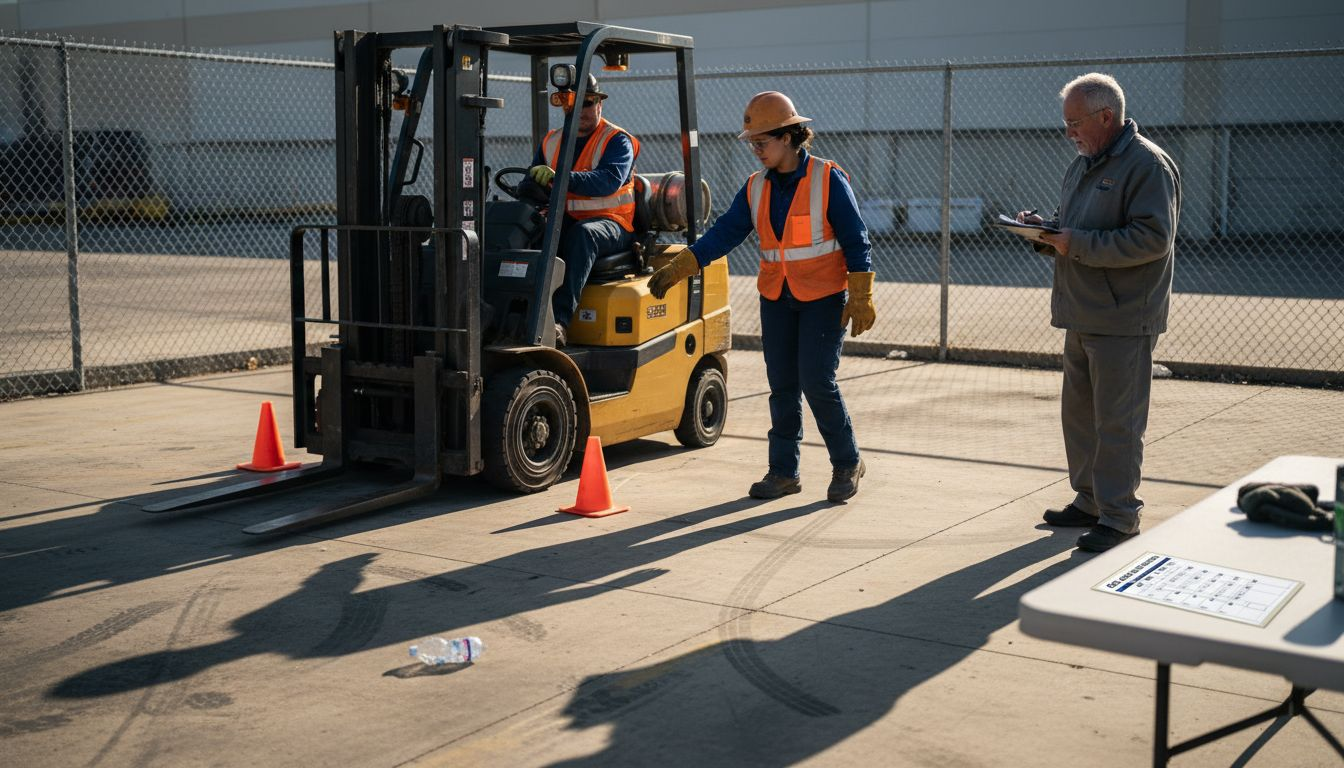
OSHA doesn’t prescribe specific curricula, but it does mandate components. OSHA requires a combination of classroom instruction and practical evaluation for forklift recertification; online courses are accepted only if paired with hands-on assessments. This hybrid approach ensures operators understand safety principles and can demonstrate competency under observation.
The recertification process follows these steps:
- Enroll in an OSHA-approved recertification course covering relevant equipment types
- Complete classroom or online theoretical instruction on safety protocols and regulations
- Pass a hands-on practical skills evaluation observed by a qualified trainer
- Receive updated certification documentation with the new expiration date
Understanding different forklift training methods helps you choose the right approach for your workforce. Here’s how options compare:
| Training Method | Advantages | Limitations |
|---|---|---|
| Fully Onsite | Complete compliance assurance, immediate feedback, customized to facility | Higher per-operator cost, requires scheduling coordination |
| Online Theory + Local Practical | Flexible completion timeline, reduced trainer expenses, consistent content quality | Requires arrangement of separate practical evaluation |
| Train-the-Trainer | Long-term cost savings, immediate access to recertification, internal expertise | Initial investment in trainer certification and materials |
The forklift certification renewal isn’t just paperwork. Practical evaluation must include equipment inspection, safe operation maneuvers, load handling, and navigating your actual workspace. Generic parking lot tests don’t satisfy OSHA’s site-specific training requirement.
Pro Tip: Bundle online theory with scheduled practical sessions at your facility. This approach minimizes downtime while ensuring the forklift evaluation process covers your specific equipment and operational challenges.
Employer Roles and Responsibilities in OSHA Recertification
OSHA places recertification obligations squarely on the employer, not the operator. Employers must provide and fund recertification training and maintain documentation for at least three years for OSHA audits. This legal framework makes compliance a core business function, not an optional benefit.
Your specific responsibilities include:
- Schedule recertification training before expiration dates
- Track certification status for every forklift operator
- Maintain complete training records with operator names, dates, and evaluator credentials
- Ensure trainers possess knowledge, training, and experience to evaluate operators
- Provide training during work hours without requiring employees to pay
Implementing train-the-trainer programs transforms recertification from a recurring expense into a manageable internal process. Certified internal trainers can conduct evaluations immediately when triggers occur, rather than waiting for external providers.
Documentation requirements extend beyond completion certificates. You need records showing:
- Training content covered during recertification
- Practical evaluation performance and pass/fail results
- Equipment types and attachments the operator is qualified to use
- Name and credentials of the evaluating trainer
Pro Tip: Digital record systems with automated expiration alerts prevent lapses. Set reminders 60 days before recertification due dates to allow scheduling flexibility without risking compliance gaps.
The cost of proper recertification programs pales compared to OSHA penalties and accident liability. Treating recertification as preventive maintenance for your workforce delivers measurable returns through reduced incidents and streamlined audits.
Consequences of Missing OSHA Recertification Deadlines
Compliance failures carry steep penalties. Failure to recertify can result in OSHA citations and fines up to $13,653 per serious violation. With multiple operators and repeated violations, penalties escalate into six-figure liabilities. Willful violations that demonstrate intentional disregard for safety requirements push fines to $136,532.
Missing a forklift recertification deadline can cost your company thousands in fines and risk workplace safety.
Financial penalties represent only the visible costs. Hidden impacts include:
- Increased workers’ compensation premiums following accidents
- Legal liability if expired operators cause injuries or property damage
- Operational shutdowns during OSHA investigations
- Reputational damage affecting customer relationships and contracts
- Difficulty obtaining insurance coverage for material handling operations
OSHA doesn’t accept ignorance as a defense. If an inspector finds operators working with expired certifications, citations follow regardless of accident history. The agency considers current certification a baseline safety requirement, not an aspirational goal.
Timely recertification reduces forklift-related accidents by up to 30%, according to industry safety data. This statistic transforms recertification from a compliance checkbox into a strategic safety investment. Fewer accidents mean lower costs, better morale, and sustained productivity.
Repeat violations trigger enhanced penalties and follow-up inspections. Companies that demonstrate patterns of non-compliance face escalating enforcement actions that can restrict operations until full compliance is achieved. The financial and operational disruption far exceeds the modest investment in proper recertification programs.
Common Misconceptions About OSHA Forklift Recertification
Misunderstandings about recertification requirements create unnecessary compliance failures. Clearing up these myths helps you build effective safety programs based on actual regulations rather than workplace folklore.
Prevalent misconceptions include:
- Myth: Once certified, operators never need recertification. Reality: OSHA mandates recertification every three years minimum, with earlier renewal required for accidents or unsafe operation.
- Myth: Online courses alone satisfy recertification requirements. Reality: Hands-on practical evaluation by a qualified trainer is mandatory; purely online programs violate OSHA standards.
- Myth: Recertification is the operator’s personal responsibility. Reality: Employers bear legal and financial responsibility for ensuring all operators maintain current certification.
- Myth: Informal on-the-job refreshers count as recertification. Reality: Formal documented training with classroom instruction and practical evaluation is required.
- Myth: Certification from one company transfers to new employers. Reality: New employers must evaluate operators on site-specific equipment and conditions before authorizing operation.
The certification card isn’t a universal license. It documents that a specific employer evaluated a specific operator on specific equipment at a specific facility. Changing any of these variables requires new evaluation.
Some managers assume experienced operators don’t need recertification. Experience without updated training creates complacency and outdated practices. The three-year cycle forces skills review and exposure to updated safety protocols that experienced operators might otherwise miss.
Addressing these misconceptions during initial training sets proper expectations. When operators and supervisors understand recertification as an ongoing requirement rather than a one-time event, compliance becomes embedded in your safety culture.
Recertification Benefits and Safety Outcomes
Proactive recertification delivers measurable returns beyond avoiding penalties. Regular training reinforces safe habits, updates operators on equipment improvements, and demonstrates management commitment to worker protection.
Workplaces with current recertification programs experience up to 30% fewer forklift accidents compared to facilities with expired or inconsistent operator credentials. This reduction translates directly to lower injury rates, reduced property damage, and improved operational efficiency.
Documented benefits include:
- Reduced accident frequency and severity through skills reinforcement
- Lower workers’ compensation costs and insurance premiums
- Improved operator confidence and job satisfaction
- Enhanced compliance readiness for inspections and audits
- Stronger safety culture across the entire organization
- Better equipment longevity through proper operation techniques
Recertification creates opportunities to address bad habits before they cause incidents. Operators may develop shortcuts or unsafe practices over three years. Formal evaluation identifies and corrects these behaviors in a structured environment rather than after an accident.
The training also keeps pace with industry evolution. Forklift technology advances continuously, with new safety features, attachment options, and operational capabilities. Recertification ensures your team understands how to leverage these improvements rather than working around unfamiliar features.
From a business continuity perspective, current certification protects operations during customer audits and contract renewals. Many large retailers and manufacturers require proof of operator certification before allowing warehouse access or awarding supply agreements. Expired certifications can disqualify you from valuable business opportunities.
View recertification as preventive maintenance for your human assets. The modest time and cost investment prevents expensive breakdowns while maximizing the performance and longevity of your workforce.
Streamline Your OSHA Forklift Recertification with Our Expert Training
Navigating OSHA requirements shouldn’t drain your resources or disrupt operations. We offer comprehensive solutions designed around your business needs. Our train the trainer online course empowers your team to manage recertification internally, reducing costs and improving responsiveness.
With over 20 years of experience delivering OSHA-compliant programs, we understand the challenges compliance managers face. Our flexible OSHA forklift training programs combine quality online instruction with practical evaluation options across our nationwide network. Whether you need individual recertification or enterprise certification solutions for businesses, we provide the expertise and support to keep your workforce compliant and safe.
Frequently Asked Questions
What happens if my forklift recertification expires?
Operating with expired certification violates OSHA standards and exposes your company to fines up to $13,653 per violation. You must immediately cease forklift operation until completing recertification training and evaluation.
Can I use only online courses for OSHA forklift recertification?
No, OSHA requires hands-on practical evaluation by a qualified trainer observing your operation. Online courses can cover theoretical content, but you must demonstrate competency in person on actual equipment.
How often must forklift operators be recertified according to OSHA?
Operators must recertify at least every three years. Earlier recertification is required if you’re involved in an accident, demonstrate unsafe operation, or begin using different equipment types.
Who is responsible for providing forklift recertification training?
Employers bear complete legal and financial responsibility for providing recertification training, maintaining documentation, and ensuring all operators remain current. Operators cannot be required to pay for required training.
What are the penalties for non-compliance with forklift recertification?
OSHA issues serious violation citations with fines up to $13,653 per expired operator. Willful violations increase penalties to $136,532. Repeat violations trigger enhanced enforcement and potential operational restrictions.
Recommended
- Forklift Hazards Explained: Reducing Warehouse Risks – Top Osha Forklift Certification
- Forklift Accident Prevention: OSHA Solutions That Work – Top Osha Forklift Certification
- Role of Safety Training: Reducing Forklift Risks – Top Osha Forklift Certification
- Most Common Causes of Forklift Accidents in the USA – Top Osha Forklift Certification