
Choosing the right equipment for elevated work tasks is only half the battle when it comes to workplace safety. Many Warehouse and Logistics Managers across the United States find that confusion around scissor lifts and their legal requirements leads to costly mistakes and compliance headaches. Clarifying the distinct safety standards for scissor lifts helps protect workers, streamline OSHA audits, and prevent operational delays, so you can move your team safely and confidently every shift.
Table of Contents
- Defining Scissor Lifts And Key Misconceptions
- Types Of Scissor Lifts And Core Features
- Osha Standards And Legal Operator Requirements
- Essential Training And Certification Process
- Common Hazards, Risks, And Safety Practices
- Employer Responsibilities And Compliance Mistakes
Key Takeaways
| Point | Details |
|---|---|
| Understanding Scissor Lifts | Scissor lifts are mobile work platforms that only move vertically, differing from aerial lifts in both design and safety requirements. |
| Types of Scissor Lifts | There are manually propelled and self-propelled scissor lifts, each suited for different work environments and mobility needs. |
| OSHA Compliance | Employers must adhere to OSHA standards, ensuring operators receive proper training and that documentation of safety protocols is meticulously maintained. |
| Safety Practices | Recognizing common hazards and implementing rigorous training, equipment inspections, and safety protocols is essential for preventing workplace accidents. |
Defining Scissor Lifts and Key Misconceptions
Scissor lifts are specialized mobile work platforms designed to transport workers vertically in various industrial environments. Mobile supported scaffolds represent critical equipment for construction, manufacturing, retail, and entertainment industries. Unlike traditional aerial lifts, scissor lifts move exclusively in a vertical direction using uniquely crossed mechanical beams that expand and contract like scissoring motion.
A common misconception among warehouse managers is that scissor lifts operate identically to aerial lifts. In reality, these platforms have distinct design characteristics and safety requirements. OSHA classifies scissor lifts as mobile supported scaffolds, which significantly impacts fall protection protocols and operational guidelines. Their vertical-only movement distinguishes them from articulated boom lifts that can extend horizontally.
The primary structural difference lies in the mechanism of elevation. Scissor lifts utilize interlocking, criss-crossing metal supports that stretch upward when hydraulically activated, creating a stable platform for workers. This design provides exceptional stability compared to other elevated work platforms, making them ideal for indoor environments with consistent, level surfaces. Warehouse teams must understand these nuanced mechanical differences to ensure proper usage and compliance with workplace safety standards.
Pro Tip: Always verify the specific weight capacity and surface requirements for your scissor lift before beginning any elevated work task.
Types of Scissor Lifts and Core Features
Scissor lifts are engineered to meet diverse workplace requirements, with two primary categories: manually propelled and self-propelled platforms. Scissor lift classifications reveal critical differences in mobility and operational capabilities that warehouse managers must understand. Manually propelled lifts require physical human effort to move and position, making them ideal for smaller, more confined spaces with limited movement needs.
Self-propelled scissor lifts represent a more advanced technological solution, featuring integrated power systems that enable independent movement across work sites. These platforms typically include electric or diesel-powered drive mechanisms, allowing operators to navigate larger work areas with greater efficiency. Key features across both lift types include robust guardrails, precise vertical elevation controls, and platform stability mechanisms designed to ensure worker safety in challenging industrial environments.
The core structural elements of scissor lifts remain consistent regardless of propulsion method. Aerial work platforms utilize interlocking crossed metal beams that expand and contract hydraulically, creating a stable elevated workspace. Standard features include platform guardrails, emergency stop controls, level indicators, and weight capacity markers. Professionals must carefully assess their specific workplace requirements to select the most appropriate scissor lift configuration, considering factors such as indoor versus outdoor use, weight capacity, and required mobility.
Here’s a concise comparison of manually propelled and self-propelled scissor lifts:
| Feature | Manually Propelled | Self-Propelled |
|---|---|---|
| Mobility | Requires human effort | Motorized, independent movement |
| Ideal Usage Area | Small, confined spaces | Large, open environments |
| Power Source | None, manual movement | Electric or diesel engine |
| Operational Efficiency | Limited by user strength | Increased worksite efficiency |
This summary highlights how different scissor lift types meet varying workplace needs.
Pro Tip: Always inspect your scissor lift’s specific operational parameters and weight limitations before beginning any elevated work task.
OSHA Standards and Legal Operator Requirements
OSHA standards for scissor lifts establish comprehensive legal requirements designed to protect worker safety in elevated work environments. These regulations mandate specific training, equipment maintenance, and operational protocols that warehouse and logistics managers must meticulously follow. Employers are legally obligated to ensure operators receive thorough training on equipment use, hazard recognition, and fall protection strategies before allowing independent lift operation.
The legal framework encompasses multiple regulatory codes, including 29 CFR 1910.28, 1910.29, and 1926.452, which outline precise requirements for scaffold and elevated work platform safety. Critical compliance elements include mandatory guardrail systems, fall protection equipment, proper stabilization techniques, and comprehensive pre-operation site hazard assessments. Operators must demonstrate proficiency in equipment inspection, understanding load capacities, recognizing environmental limitations, and implementing emergency response procedures.
Workplace safety regulations require employers to develop and maintain detailed documentation of operator training, equipment maintenance records, and periodic skill reassessments. These legal requirements extend beyond initial certification, mandating ongoing education and periodic skill verification to ensure continuous workplace safety. Failure to comply with these OSHA standards can result in substantial financial penalties, potential operational shutdowns, and increased liability for workplace accidents involving scissor lift operations.
Pro Tip: Maintain a comprehensive digital record of all operator certifications, equipment inspections, and training documentation to streamline OSHA compliance audits.
Essential Training and Certification Process
Scissor lift operator training represents a comprehensive process designed to ensure workplace safety and operational excellence. The certification program encompasses both theoretical knowledge and practical skill demonstration, requiring operators to master critical safety protocols, equipment handling techniques, and hazard recognition strategies. Employers must implement a structured training approach that goes beyond simple instruction, focusing on developing a deep understanding of operational risks and prevention methods.
The training curriculum typically includes detailed modules covering equipment inspection procedures, proper personal protective equipment (PPE) usage, site-specific hazard assessments, and emergency response techniques. Operators must demonstrate proficiency in multiple critical areas, including understanding manufacturer guidelines, assessing lift stability, performing functional equipment checks, and implementing weight distribution protocols. Comprehensive training validates an operator’s ability to navigate complex workplace scenarios while maintaining optimal safety standards.
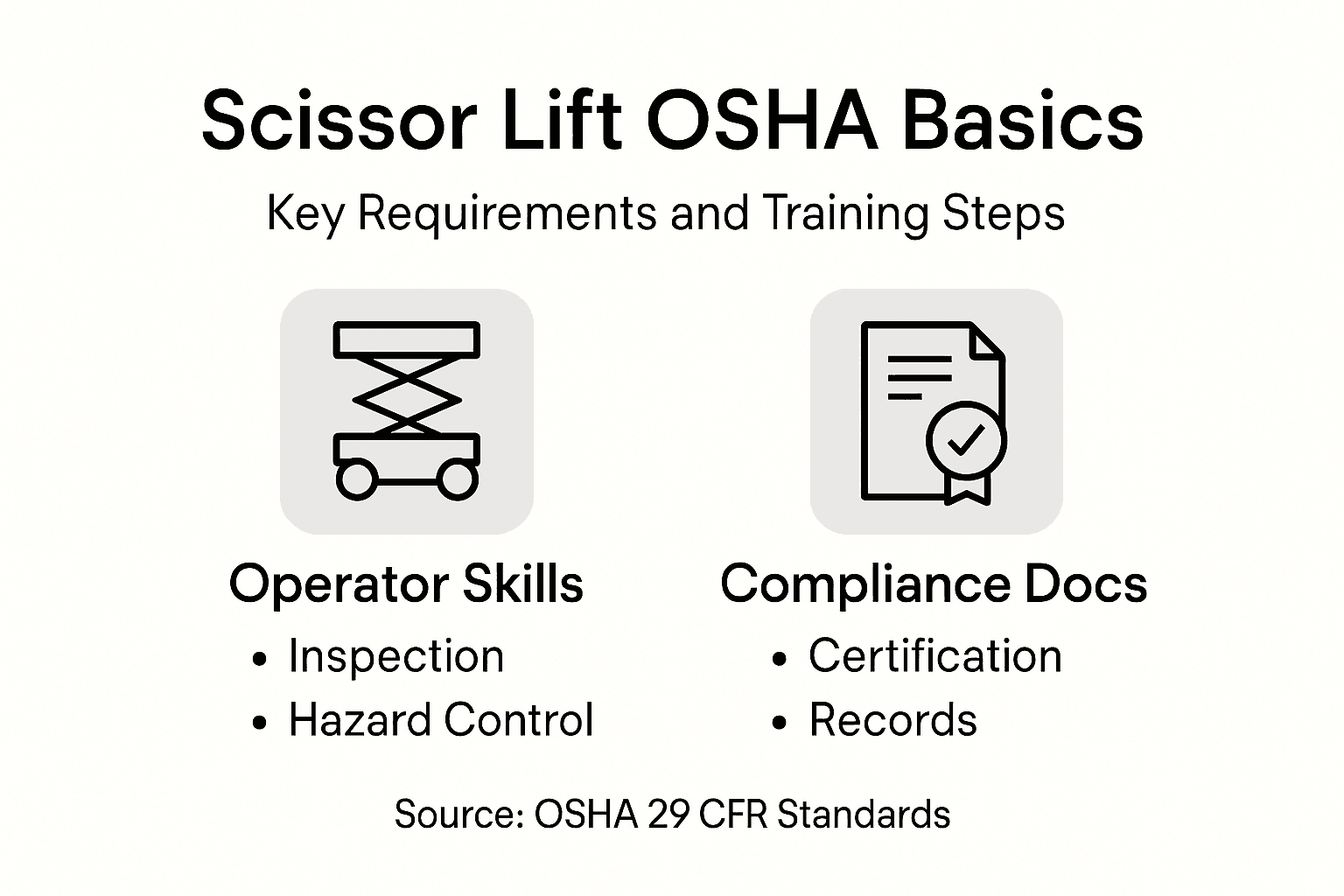
Documentation plays a crucial role in the certification process, with employers required to maintain detailed records of training completion, skill assessments, and periodic recertification efforts. OSHA mandates that certification documentation include specific details such as operator names, training dates, assessment results, and verification of practical competency. The certification is not a one-time event but a continuous process of education, skill refinement, and periodic reassessment to ensure ongoing workplace safety and regulatory compliance.
Pro Tip: Create a digital tracking system that automatically schedules operator recertification and sends advance notifications to maintain continuous compliance.
Common Hazards, Risks, and Safety Practices
Common scissor lift hazards represent significant workplace safety challenges that demand comprehensive risk management strategies. These elevated work platforms present complex operational risks including potential falls, equipment tip-overs, unexpected collisions, and dangerous electrical contact scenarios. Warehouse managers must recognize that most accidents stem from operator error, environmental conditions, or inadequate safety protocol implementation.
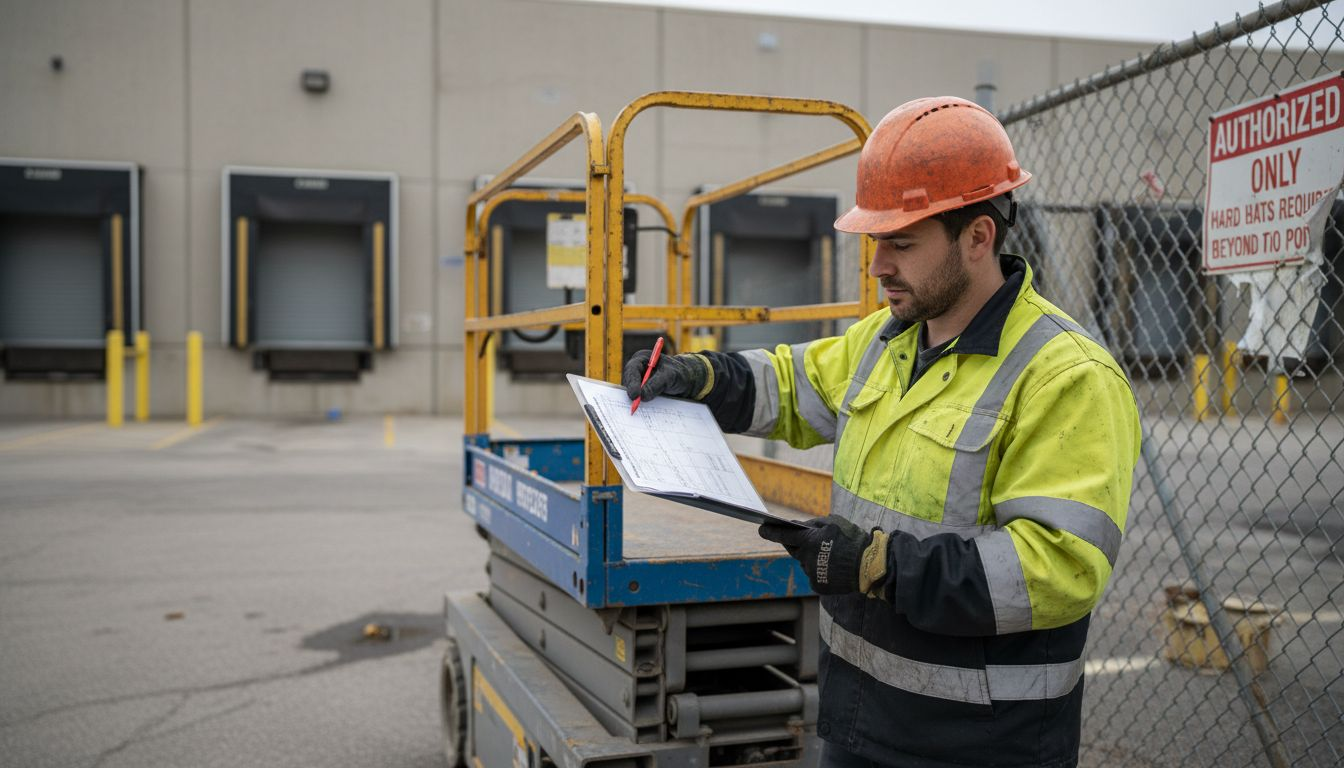
The most critical risks involve unstable surface positioning, improper guardrail usage, and moving lifts while elevated. Operators face heightened danger when navigating uneven terrain, encountering overhead obstacles, or failing to conduct thorough pre-operation equipment inspections. Environmental factors like wind speed, floor surface conditions, and proximity to electrical infrastructure can dramatically increase accident potential, requiring meticulous situational awareness and proactive safety planning.
Safety practices demand a multifaceted approach that combines rigorous training, equipment maintenance, and continuous risk assessment. Key prevention strategies include mandatory personal protective equipment usage, implementing controlled access zones around scissor lifts, conducting regular equipment inspections, and establishing clear communication protocols between ground personnel and lift operators. Employers must develop comprehensive safety documentation, provide ongoing training, and create a workplace culture that prioritizes hazard recognition and immediate risk mitigation.
The following table outlines the most common scissor lift hazards and the recommended safety responses:
| Hazard Type | Example Scenario | Safety Response |
|---|---|---|
| Tip-Over Risks | Uneven flooring | Use on level surfaces |
| Fall Hazards | Improper guardrails | Always secure guardrails |
| Electrical Contact | Overhead power lines | Maintain safe distance |
| Collision/Obstruction | Moving near obstacles | Perform site assessment |
Understanding hazard scenarios aids in applying effective safety protocols on every shift.
Pro Tip: Develop a standardized pre-operation safety checklist that operators must complete and document before each scissor lift use to ensure consistent risk assessment.
Employer Responsibilities and Compliance Mistakes
Employer OSHA compliance involves a comprehensive set of legal and safety obligations that extend far beyond basic training requirements. Warehouse managers must understand that scissor lift safety is a holistic responsibility encompassing equipment maintenance, operator training, workplace hazard assessment, and continuous risk management. Failure to meet these multifaceted requirements can result in substantial financial penalties, potential workplace injuries, and legal liability.
The most frequent compliance mistakes involve inadequate operator training, inconsistent equipment inspections, and incomplete documentation of safety protocols. Employers often underestimate the depth of training required, providing minimal instruction that fails to cover critical aspects such as equipment-specific operational nuances, environmental risk assessment, and emergency response procedures. Systematic documentation gaps can leave organizations vulnerable during OSHA audits, with incomplete training records potentially triggering significant regulatory sanctions.
Effective compliance demands a proactive approach that integrates comprehensive training programs, rigorous equipment maintenance schedules, and transparent safety documentation. Key responsibilities include developing detailed safety protocols, conducting regular equipment inspections, maintaining current operator certifications, and creating a workplace culture that prioritizes safety awareness. Employers must implement robust systems that track training completions, equipment maintenance cycles, and periodic skill reassessments to demonstrate ongoing commitment to workplace safety standards.
Pro Tip: Create a centralized digital compliance management system that automatically tracks operator certifications, equipment inspections, and training requirements to ensure consistent OSHA adherence.
Ensure OSHA Compliance with Expert Scissor Lift Operator Training
Understanding OSHA requirements for scissor lift operators can be overwhelming. The challenges of meeting stringent training standards, maintaining thorough documentation, and ensuring ongoing operator safety must not be underestimated. Key concerns such as fall protection protocols, hazard recognition, and equipment inspection are critical to preventing accidents and avoiding costly compliance penalties.
Take control of workplace safety today by enrolling in specialized programs at Forkliftacademy.com. Explore our comprehensive Forklift Certification Archives – Top Osha Forklift Certification to find OSHA-compliant courses tailored for scissor lift operators. Strengthen your team’s skills through expert training that covers all legal operator requirements while enhancing operational efficiency. Visit our main site to access flexible online and onsite training options designed for your unique business needs. Start your journey to safer, legally compliant lifts now.
Frequently Asked Questions
What are the primary OSHA requirements for scissor lift operators?
Scissor lift operators must undergo thorough training on equipment use, hazard recognition, and fall protection strategies. Compliance with OSHA standards includes understanding load capacities, environmental limitations, and emergency response procedures.
How often do scissor lift operators need to be recertified?
Recertification for scissor lift operators is an ongoing process mandated by OSHA. Employers should establish periods for skills reassessment and refresh training to ensure operators remain compliant and up-to-date with safety protocols.
What safety practices should be followed when using scissor lifts?
Operators should always inspect the scissor lift before each use, secure guardrails, and wear appropriate personal protective equipment (PPE). Conducting site hazard assessments and ensuring the lift is used on stable surfaces are also critical safety practices.
What are common misconceptions about scissor lifts compared to aerial lifts?
A common misconception is that scissor lifts operate like aerial lifts; however, scissor lifts only move vertically, while aerial lifts can extend horizontally. This distinction influences their design, functionality, and associated safety protocols.
Recommended
- Understanding OSHA Standards for Scissor Lifts – Top Osha Forklift Certification
- Complete Guide to the Role of a Scissor Lift Operator – Top Osha Forklift Certification
- Understanding Scissor Lift Operator Responsibilities – Top Osha Forklift Certification
- Essential Scissor Lift Training Steps for Safe Operations – Top Osha Forklift Certification