
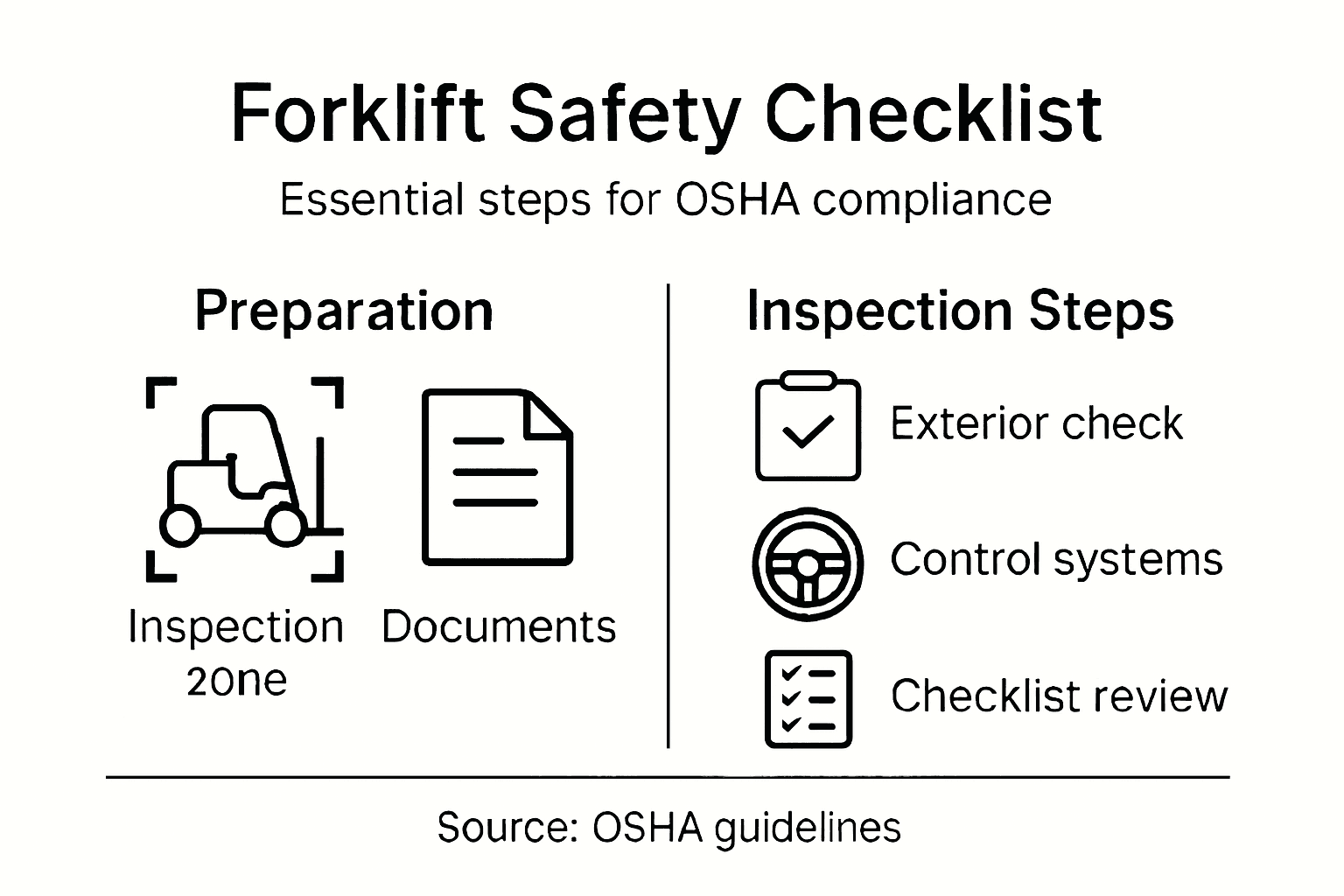
Forklift-related accidents in American warehouses lead to more than 34,000 serious injuries every year. Keeping your operation safe starts with a clear, OSHA-compliant safety checklist for your equipment and worksite. For warehouse and logistics managers, knowing exactly how to prepare your inspection zone, gather essential documentation, and verify every checkpoint helps reduce downtime and protect your team. This guide breaks down each step to support your workplace safety and training protocols.
Table of Contents
- Step 1: Assess Worksite And Prepare Inspection Zone
- Step 2: Gather Essential Forklift Documents And Materials
- Step 3: Inspect Forklift Exterior And Safety Equipment
- Step 4: Examine Operational And Control Systems
- Step 5: Verify Checklist Completion And Address Issues
Quick Summary
| Key Point | Explanation |
|---|---|
| 1. Establish a Safe Inspection Zone | Create a dedicated space at least 10 feet away from operations to minimize distractions during safety inspections. |
| 2. Gather Essential Documents | Collect and organize maintenance logs, inspection reports, and certifications to support compliance during your inspection. |
| 3. Conduct a Thorough Exterior Check | Perform a detailed visual inspection of the forklift’s exterior and safety equipment to identify potential hazards. |
| 4. Test Operational Systems | Systematically evaluate all control systems, including brakes and warning devices, to ensure they function correctly. |
| 5. Document and Address Findings | Carefully review the inspection checklist, categorize issues, and notify supervisors about any critical safety concerns. |
Step 1: Assess worksite and prepare inspection zone
Before you start your forklift inspection, creating a safe and organized workspace is critical. You’ll want to establish a dedicated inspection zone that minimizes potential safety risks and allows for a comprehensive equipment review. Proper preparation of the inspection area sets the foundation for a thorough and effective safety check.
Begin by clearing the designated inspection area of all unnecessary equipment, materials, and potential obstructions. Ensure the space has adequate lighting so you can perform a detailed visual examination of the forklift. Mark out a specific zone using floor tape or temporary markers that creates a buffer between the inspection area and normal workplace traffic. This helps prevent interruptions and maintains a controlled environment for your safety assessment.
Position the forklift in a level area with sufficient room to walk around and inspect every component. Remove any nearby objects that might interfere with a complete 360degree examination. Check that you have all necessary personal protective equipment like safety glasses, gloves, and steel-toed boots before starting the inspection process.
Pro tip: Always designate your inspection zone at least 10 feet away from other operational areas to minimize potential distractions and ensure a focused safety review.
Step 2: Gather essential forklift documents and materials
Preparing for a thorough forklift safety inspection requires collecting all necessary documentation and materials beforehand. Your goal is to assemble a comprehensive set of records that will support a systematic and compliant review of the equipment. A well-organized approach ensures you can track maintenance history, verify certifications, and demonstrate adherence to safety standards.
Start by gathering key documents including the forklift’s maintenance log, previous inspection reports, operator training certificates, and equipment manufacturer specifications. Forklift safety checklist items provide a critical framework for understanding what documentation you need. Collect digital and physical copies of records ensuring you have both current and historical documentation. Make sure all operator certifications are up to date and readily accessible, including individual training records and current OSHA compliance certificates.
Organize these materials in a dedicated binder or digital folder with clear section dividers. Verify that serial numbers match across documents and the physical equipment. Check that maintenance logs show consistent and timely service records, and confirm all safety inspections have been completed within required timeframes.
Pro tip: Create a digital backup of all critical forklift documentation and store it in a secure cloud storage system to prevent potential loss of important safety records.
Here’s a summary of documentation types and their inspection value:
| Document Type | Purpose During Inspection | Common Issues Detected |
|---|---|---|
| Maintenance Log | Track repair and service history | Missed maintenance, overdue work |
| Inspection Reports | Verify previous findings and actions | Unresolved issues, incomplete |
| Operator Certifications | Confirm qualified and legal operation | Expired or missing certificates |
| Manufacturer Specs | Ensure inspection meets equipment guidelines | Outdated references, errors |
Step 3: Inspect forklift exterior and safety equipment
Your exterior forklift inspection is a critical step in ensuring workplace safety and equipment reliability. You will thoroughly examine every visible component of the forklift to identify potential issues that could compromise operational performance or worker safety.
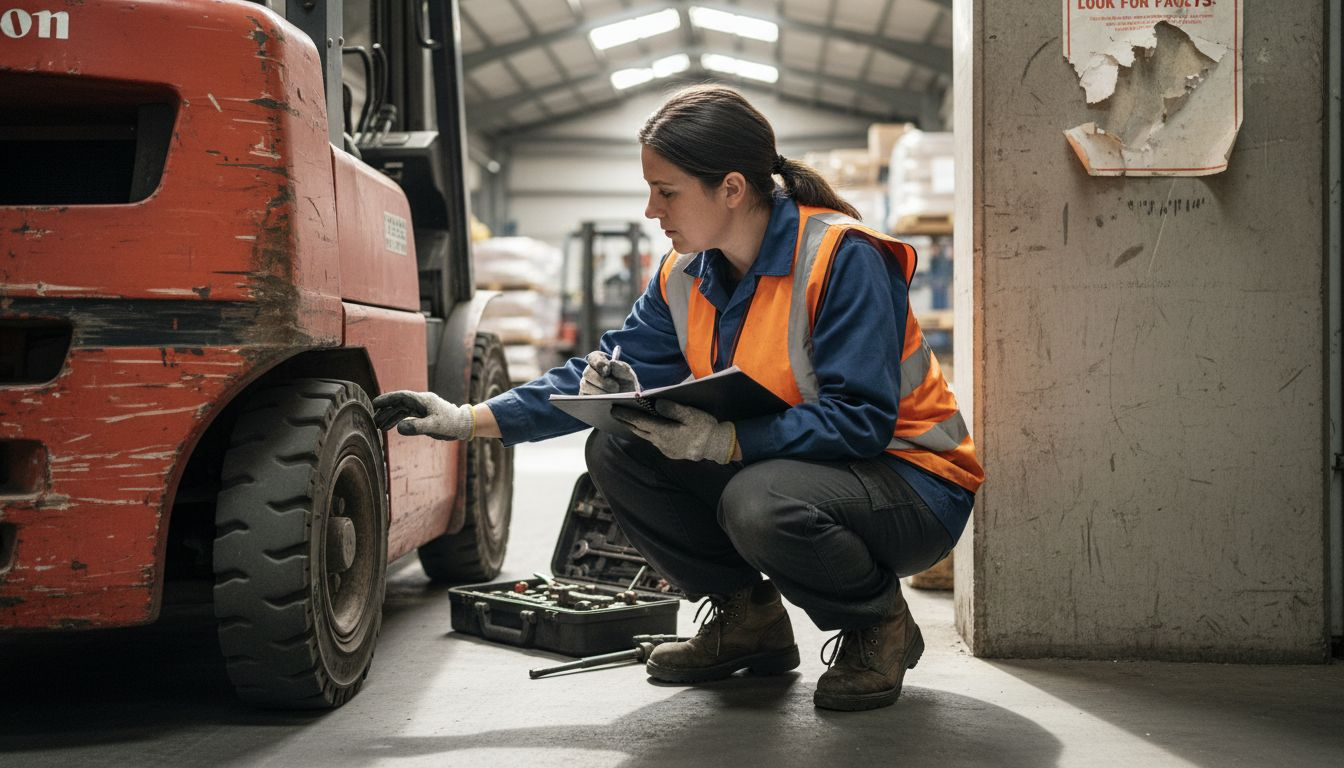
Begin with a comprehensive visual assessment of the forklift’s body, focusing on critical safety inspection points. Check the entire exterior for signs of structural damage including cracks, corrosion, or significant wear. Examine the mast assembly carefully, looking for any misalignment or damage to the lifting mechanisms. Inspect the tires closely for uneven wear, cuts, or potential damage that could affect stability during operation. Pay special attention to the forks, verifying they are straight, free from cracks, and have no excessive wear that might compromise their lifting capacity.
Move to the operator’s compartment and meticulously evaluate all safety equipment. Test the seatbelt for proper function and condition, ensuring it provides secure restraint. Verify that all safety labels are clearly visible and legible. Check the horn, lights, and backup alarm to confirm they operate correctly. Examine the overhead guard for any structural compromises like dents or cracks that could fail during a potential rollover scenario. Confirm that the capacity plate is clearly displayed and all information remains readable.
Pro tip: Always use a bright flashlight during your exterior inspection to help reveal subtle signs of damage that might be missed under normal lighting conditions.
This table outlines typical forklift exterior checkpoints and what they help prevent:
| Component | What to Check For | Potential Risk if Overlooked |
|---|---|---|
| Mast Assembly | Damage, misalignment | Lifting failure or load drop |
| Tires | Uneven wear, cracks | Tip-overs, loss of control |
| Forks | Bends, cracks, excessive wear | Load instability or fork breakage |
| Overhead Guard | Cracks, dents | Operator injury in rollover |
Step 4: Examine operational and control systems
Carefully examining the forklift’s operational and control systems is essential for identifying potential safety risks and ensuring smooth performance. You will systematically test and verify each critical system to confirm the equipment meets safety standards and operates correctly.
Begin with a comprehensive evaluation of the forklift pre-operation safety requirements. Start the engine and test all control systems while the forklift is stationary. Check the brake performance by applying both the service and parking brakes, ensuring they engage smoothly and hold the forklift securely. Verify the steering mechanism responds precisely without excessive play or resistance. Test the hydraulic controls by raising and lowering the mast, checking for smooth operation and absence of jerky movements or unusual sounds.
Proceed to inspect all warning devices and gauges. Confirm that the hour meter, temperature indicators, and fuel or battery charge meters are functioning accurately. Test the horn, warning lights, and backup alarm to ensure they activate correctly. Check all fluid levels including hydraulic fluid, engine oil, and coolant. Look for any signs of leaks around seals, hoses, and connection points. Pay special attention to the electrical systems, testing all switches, lights, and electronic controls for proper responsiveness.
Pro tip: Keep a small notebook during your system inspection to document even minor irregularities that might indicate developing mechanical issues.
Step 5: Verify checklist completion and address issues
The final stage of your forklift safety inspection involves meticulously reviewing your completed checklist and taking decisive action on any identified problems. This critical step ensures that every safety concern is properly documented and appropriately addressed to maintain workplace safety standards.
Carefully review forklift inspection documentation protocols to confirm that every section of the checklist has been thoroughly completed. Go through each item systematically, verifying that you have documented observations for every component. Pay special attention to any sections marked with potential issues or concerns. If you discovered any defects during your inspection such as structural damage, operational malfunctions, or safety equipment problems, categorize them by severity and immediate action required.
For any identified issues, take immediate and appropriate action. Minor problems might require simple maintenance or adjustment, while significant defects could necessitate removing the forklift from service until professional repairs are completed. Create a detailed report documenting each finding, including specific location, nature of the issue, and recommended corrective action. Notify your maintenance supervisor or safety manager about any critical findings that could compromise equipment performance or operator safety. Ensure all documentation is filed properly and follows your organization’s safety reporting procedures.
Pro tip: Photograph any identified mechanical issues during your inspection to provide visual evidence and support for your written documentation.
Enhance Your Forklift Safety Inspections with Expert Guidance and Certification
Conducting a detailed forklift safety checklist for OSHA compliance is a vital step toward protecting your workplace and operators. This article highlights the challenges of assessing equipment condition, verifying documentation, and ensuring operational controls function correctly to prevent accidents and maintain safety standards. If managing these complex inspection procedures feels overwhelming or you want to guarantee your team is fully qualified, you are not alone.
Forkliftacademy.com offers tailored solutions designed to simplify compliance and boost workplace safety. Explore our extensive Forklift Safety Archives to deepen your understanding of inspection best practices and OSHA requirements. Our online and onsite training programs provide hands-on certification that aligns perfectly with the practical checks detailed in this guide. By partnering with us, you ensure your operators are expertly trained and your equipment is regularly reviewed under the latest safety protocols.
Take control of your forklift safety today—visit Forkliftacademy.com to access industry-leading training and certification that empowers your team to spot hazards confidently, document inspections properly, and maintain OSHA compliance with ease. Ready to elevate your safety program? Start your journey with our comprehensive Forklift Certification Archives and secure safer operations now.
Frequently Asked Questions
What are the key steps in a forklift safety checklist for OSHA compliance?
To ensure OSHA compliance, perform the following key steps: assess your worksite by preparing a dedicated inspection zone, gather essential forklift documents, inspect the forklift’s exterior and safety equipment, examine operational and control systems, and verify checklist completion while addressing any issues. Start each inspection by clearing the area and gathering all necessary documentation, including maintenance logs.
How do I properly prepare the inspection zone for a forklift safety checklist?
Begin by clearing the designated inspection area of any unnecessary equipment and potential obstructions. Create a safe space at least 10 feet away from operational areas using floor tape or markers to minimize distractions during your safety check.
What documents should I gather before conducting a forklift safety inspection?
Collect key documents such as maintenance logs, previous inspection reports, operator training certificates, and manufacturer specifications. Organize these materials in a binder or digital folder to ensure easy access and clear verification of compliance with safety standards.
How do I inspect the exterior of the forklift effectively?
Conduct a thorough visual examination of all visible components, checking for damage, misalignment, and wear. Pay attention to critical areas such as the mast assembly, tires, forks, and safety equipment, making sure everything functions correctly and is in good condition.
What should I do if I find issues during the forklift safety inspection?
Categorize any identified issues by severity and take appropriate action. For minor problems, perform maintenance or adjustments, while significant defects may require removing the forklift from service and documenting the issues for repair.
How can I ensure all safety checklist items are completed and addressed?
Carefully review your completed checklist at the end of the inspection to confirm that every section has been filled out accurately. Document your observations and take immediate action on any issues, notifying supervisors if there are critical concerns regarding equipment safety.
Recommended
- Complete Guide to OSHA Compliance for Forklift Safety – Top Osha Forklift Certification
- Forklift Safety: How to Prepare for OSHA Inspections – Top Osha Forklift Certification
- 7 Key Steps for a Complete Forklift Evaluation Checklist – Top Osha Forklift Certification
- 7 Essential Tips in the OSHA Forklift Requirements List – Top Osha Forklift Certification